


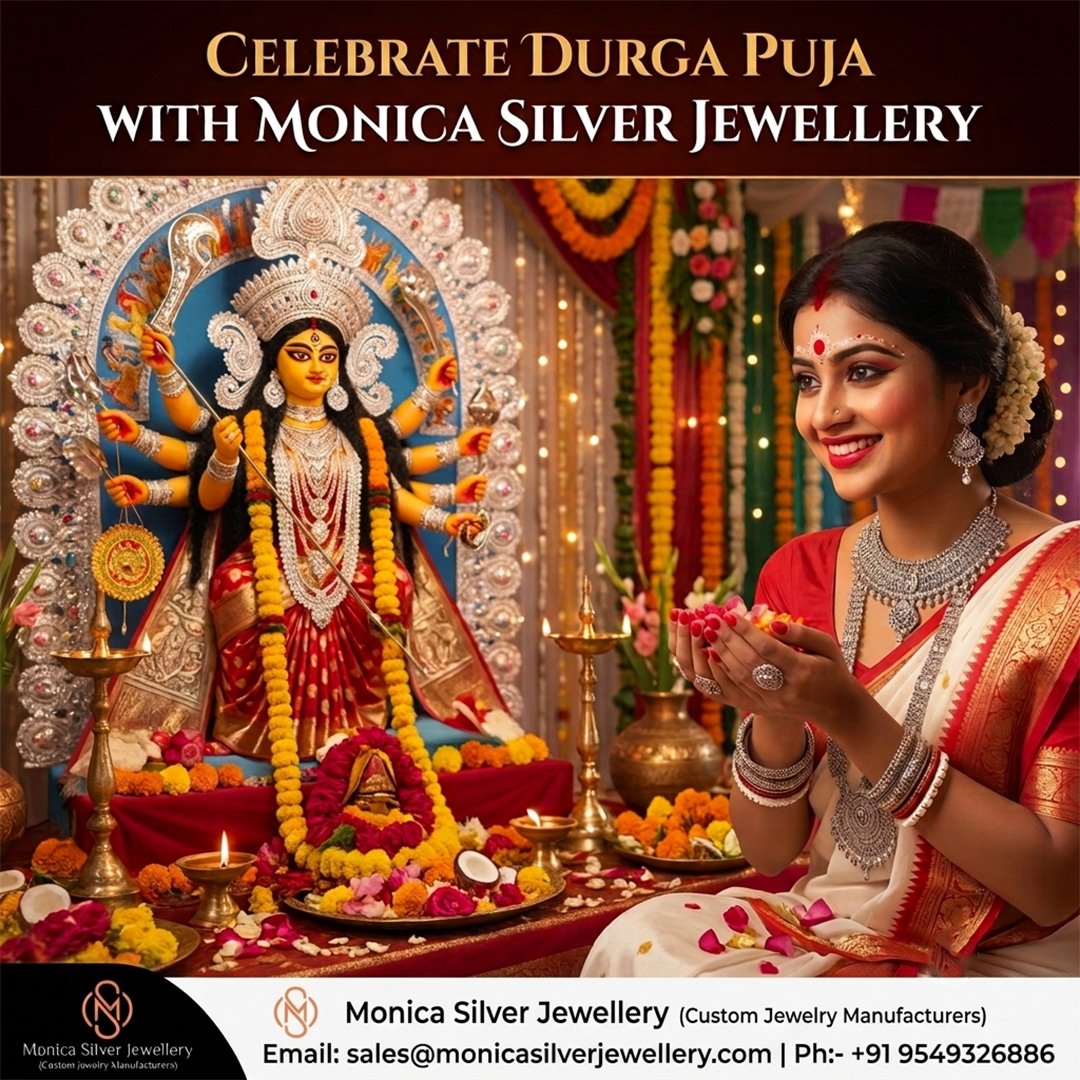
By Monica Silver Jewellery | Festival Traditions, Culture & Jewellery
Durga Puja is one of India’s most beloved festivals, celebrated with devotion, vibrant traditions, artistic creativity, and the spirit of togetherness. Especially in West Bengal, this auspicious occasion transforms streets and neighbourhoods into beautiful celebrations filled with magnificent pandals, traditional music, cultural performances, and heartfelt prayers to Maa Durga.
For jewellery lovers, Durga Puja is also a wonderful time to embrace traditional elegance. From intricate silver necklaces and statement earrings to beautifully crafted bangles and rings, jewellery adds a timeless charm to festive attire.
At Monica Silver Jewellery, we celebrate the beauty of Indian traditions and the craftsmanship that makes every festive occasion memorable.
What Is Durga Puja? Understanding Its Meaning
Durga Puja is an annual Hindu festival dedicated to Goddess Durga, who represents divine feminine power, courage, protection, and the triumph of righteousness. Celebrated primarily during September and October, the festival commemorates Goddess Durga’s victory over the demon Mahishasura.
The celebration is particularly prominent in West Bengal, Assam, Tripura, Odisha, Jharkhand, and communities across India and abroad.
Beyond its religious significance, Durga Puja is a celebration of culture, creativity, family, and community. It brings together devotees, artists, artisans, and visitors to honour a tradition passed down through generations.
The History of Durga Puja: How Did the Festival Begin?
The roots of Durga Puja lie in Hindu mythology and centuries-old religious traditions. Over time, the festival evolved into one of India’s most remarkable cultural celebrations.
1. The Mythological Story of Goddess Durga
According to Hindu mythology, Mahishasura was a powerful demon who threatened the gods and sought to establish his dominance over the universe. To defeat him, the gods combined their divine powers to create Goddess Durga.
Armed with divine weapons and riding a lion, Goddess Durga fought a fierce battle against Mahishasura. Her eventual victory symbolised the triumph of good over evil and the restoration of peace and cosmic balance.
This legendary battle remains the spiritual heart of Durga Puja. It reminds devotees that courage, righteousness, and divine strength can overcome even the greatest challenges.
2. The Tradition of Autumn Durga Puja
Durga Puja is traditionally celebrated during the Hindu month of Ashwin, which generally falls in September or October.
According to a popular tradition associated with the Ramayana, Lord Rama worshipped Goddess Durga before his battle against Ravana. This autumnal worship is commonly associated with the name Akal Bodhan, meaning the unconventional or untimely awakening of the goddess.
Today, the autumn festival is celebrated with extraordinary devotion, particularly in Bengal, where it is also cherished as the homecoming of Maa Durga.
3. From Royal Households to Community Celebrations
Historically, Durga Puja in Bengal was closely associated with wealthy families and royal or aristocratic households. Over the centuries, community-organised celebrations became increasingly popular, allowing more people to participate in the festivities.
Public pandals, artistic installations, elaborate decorations, and neighbourhood celebrations transformed Durga Puja into an inclusive cultural event.
Today, the festival brings together people from different backgrounds through devotion, art, music, food, and shared traditions.
Why Is Durga Puja Celebrated? The Spiritual Significance
Durga Puja carries several important meanings that continue to inspire millions of people.
Victory of good over evil: Goddess Durga’s defeat of Mahishasura represents the victory of righteousness over destructive forces.
Power of the divine feminine: Maa Durga embodies Shakti, the divine feminine energy associated with strength, protection, compassion, and creation.
Hope and new beginnings: The festival encourages people to face challenges with courage and welcome new opportunities with positivity.
Family and togetherness: The homecoming of Maa Durga is especially meaningful in Bengali culture, where the goddess is lovingly welcomed as a daughter returning to her parental home.
Gratitude and devotion: Prayers, offerings, rituals, and community celebrations allow devotees to express gratitude and seek blessings for prosperity, happiness, and well-being.
These values make Durga Puja much more than a religious occasion. It is a celebration of faith, resilience, and the enduring connection between tradition and everyday life.
The Five Main Days of Durga Puja
Although the festival spans a longer ritual period, the principal public celebrations in Bengal centre on five days.
Maha Shashthi
Maa Durga is ceremonially welcomed, and the main celebrations begin. Pandals fill with visitors, decorations, and festive excitement.
Maha Saptami
Ritual worship continues, including the Nabapatrika ceremony in many Bengali traditions.
Maha Ashtami
One of the most auspicious days, Maha Ashtami is associated with special prayers, Anjali offerings, and devotion to the goddess.
Maha Navami
Devotees offer prayers and participate in rituals honouring Maa Durga’s divine strength and victory.
Vijayadashami or Bijoya Dashami
The festival concludes with farewell ceremonies and the immersion of Durga idols. In Bengal, Bijoya Dashami also carries traditions of exchanging greetings, visiting loved ones, and sharing sweets.
The customs and exact observances can vary by region and family tradition.
Durga Puja Traditions: Pandals, Dhak, Bhog and Sindoor Khela
Durga Puja is celebrated through a rich variety of rituals and artistic traditions.
- Durga idols: Skilled artisans create magnificent images of Maa Durga and her family.
- Pandal hopping: Families and friends visit elaborately decorated temporary structures showcasing traditional and contemporary art.
- Dhak music: The rhythmic beats of traditional Bengali drums create the unmistakable sound of the festival.
- Pushpanjali: Devotees offer flowers and prayers to the goddess.
- Bhog: Special food offerings are prepared and shared as part of the celebrations.
- Sindoor Khela: In many Bengali communities, married women participate in this traditional vermilion ceremony on Vijayadashami.
- Idol immersion: The immersion of the goddess’s image symbolises farewell and the cyclical relationship between arrival, departure, and renewal.
In 2021, UNESCO inscribed Durga Puja in Kolkata on the Representative List of the Intangible Cultural Heritage of Humanity, recognising its remarkable cultural and artistic importance.
The Significance of Jewellery During Durga Puja
Festivals and jewellery have shared a special relationship in Indian culture for generations. During Durga Puja, traditional outfits and carefully chosen accessories help express personal style while honouring cultural heritage.
Silver jewellery is especially appealing for those who appreciate intricate craftsmanship, traditional motifs, and versatile designs.
Here are some popular festive styling ideas:
Traditional silver necklaces: Pair an ornate silver necklace with a saree, anarkali, or festive ethnic outfit for an elegant statement.
Silver jhumkas: These classic earrings complement Bengali sarees and other traditional attire beautifully.
Silver bangles and bracelets: Layered bangles can add movement and festive character to your look.
Statement rings: Detailed silver rings offer a refined finishing touch for family gatherings, celebrations, and festive photographs.
Contemporary silver jewellery: Minimalist necklaces, delicate earrings, and modern silver designs are ideal for those who prefer understated elegance.
When choosing festive jewellery, consider your outfit’s colour, neckline, embroidery, and overall style. The goal is to create a balanced look that feels both comfortable and special.
Celebrate Durga Puja with Monica Silver Jewellery
At Monica Silver Jewellery, we believe jewellery is more than an accessory. It is a reflection of craftsmanship, personal expression, and the traditions we cherish.
As Durga Puja brings families and communities together, it also offers an opportunity to celebrate the artistry of jewellery making. Whether you love traditional designs or contemporary silver creations, thoughtful jewellery styling can make your festive wardrobe feel even more special.
Discover jewellery that complements your festive celebrations and reflects your individual style.
Monica Silver Jewellery
Custom Jewellery Manufacturers
Email: sales@monicasilverjewellery.com
Phone: +91 9549326886
Frequently Asked Questions About Durga Puja
1. What is the history of Durga Puja?
Durga Puja has its roots in Hindu religious traditions and mythology. In Bengal, it evolved over centuries from household and aristocratic celebrations into large-scale community festivities.
2. Why is Durga Puja celebrated?
It celebrates Goddess Durga’s victory over Mahishasura, symbolising the triumph of good over evil and the power of divine feminine energy.
3. When is Durga Puja celebrated?
Durga Puja is generally celebrated in September or October, during the Hindu month of Ashwin. The dates change each year according to the Hindu lunar calendar.
4. What is the significance of Vijayadashami?
Vijayadashami marks the conclusion of Durga Puja in Bengal and celebrates the goddess’s victory. It is also a time for farewells, blessings, and exchanging festive greetings.
5. Why is Durga Puja important in Bengali culture?
It represents devotion, the homecoming of Maa Durga, artistic expression, family reunions, and community spirit. It is one of the most important cultural celebrations in Bengal.
6. What jewellery can I wear during Durga Puja?
Silver necklaces, jhumkas, bangles, bracelets, and statement rings are excellent choices. Select designs that complement your traditional outfit and personal style.
Conclusion
Durga Puja is a timeless celebration of faith, courage, creativity, and togetherness. Its story reminds us that goodness and strength can overcome adversity, while its traditions preserve India’s rich cultural heritage.
As you celebrate the blessings of Maa Durga, embrace the beauty of tradition through festive clothing, meaningful rituals, and jewellery that reflects your style.
Monica Silver Jewellery wishes you a joyful, prosperous, and blessed Durga Puja!
May Maa Durga bring happiness, peace, and prosperity to every home.