


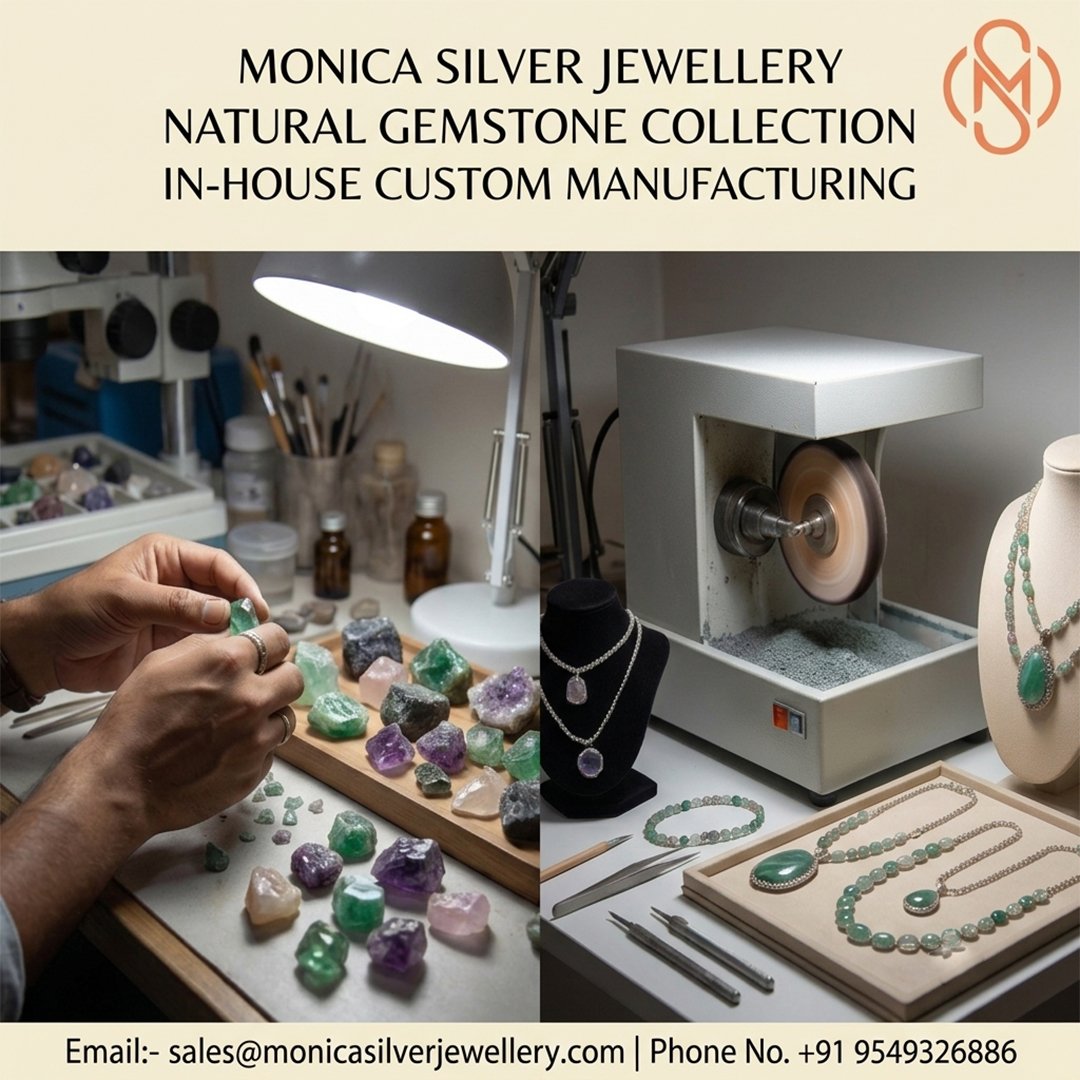
Discover the beauty of natural gemstones, explore the meaning behind birthstones, and learn how gemstones are transformed into beautiful silver jewellery with Monica Silver Jewellery.
Gemstones have fascinated people for centuries with their natural beauty, distinctive colours, rarity, and cultural significance. From sparkling precious stones to colourful semi-precious gemstones, every stone has its own character, making it a wonderful choice for creating jewellery that reflects personal style and individuality.
At Monica Silver Jewellery, gemstones are an important part of jewellery design and manufacturing. Whether you are searching for a meaningful birthstone pendant, elegant gemstone earrings, a statement ring, or custom gemstone jewellery for your brand, understanding gemstones helps you make a more informed choice.
In this comprehensive guide, we explore the world of gemstones, including birthstones, traditional healing stones, precious and semi-precious gemstones, gemstone selection, and the step-by-step process of transforming gemstones into finished jewellery.
1. What Are Gemstones?
Gemstones are naturally occurring minerals, rocks, or organic materials valued for their beauty, colour, durability, and suitability for jewellery. Some gemstones are prized for their brilliance and rarity, while others are appreciated for their unique patterns, vibrant shades, or traditional significance.
Gemstones can be cut and polished into different shapes and sizes before being set into silver, gold, or other jewellery materials.
Popular gemstones include amethyst, garnet, turquoise, citrine, peridot, topaz, sapphire, ruby, emerald, moonstone, and labradorite.
Why Are Gemstones Popular in Jewellery?
- Natural beauty: Each gemstone has its own colour, texture, and visual character.
- Personal meaning: Birthstones and symbolic stones can represent birthdays, relationships, milestones, and personal memories.
- Design versatility: Gemstones complement contemporary, traditional, minimalist, and statement jewellery.
- Individuality: Natural variations make every stone distinctive.
- Customisation: Gemstones can be selected according to colour, size, cut, shape, and jewellery design requirements.
At Monica Silver Jewellery, gemstone selection is an important starting point for creating jewellery that combines attractive design with the character of the chosen stone.
2. Birthstones: Gemstones Associated With Each Month
Birthstones are gemstones traditionally associated with the twelve months of the year. Many people choose birthstone jewellery to celebrate birthdays, anniversaries, family connections, and meaningful occasions.
Birthstone jewellery is also popular for personalised gifts, including rings, pendants, bracelets, and earrings.
Complete Birthstone Guide
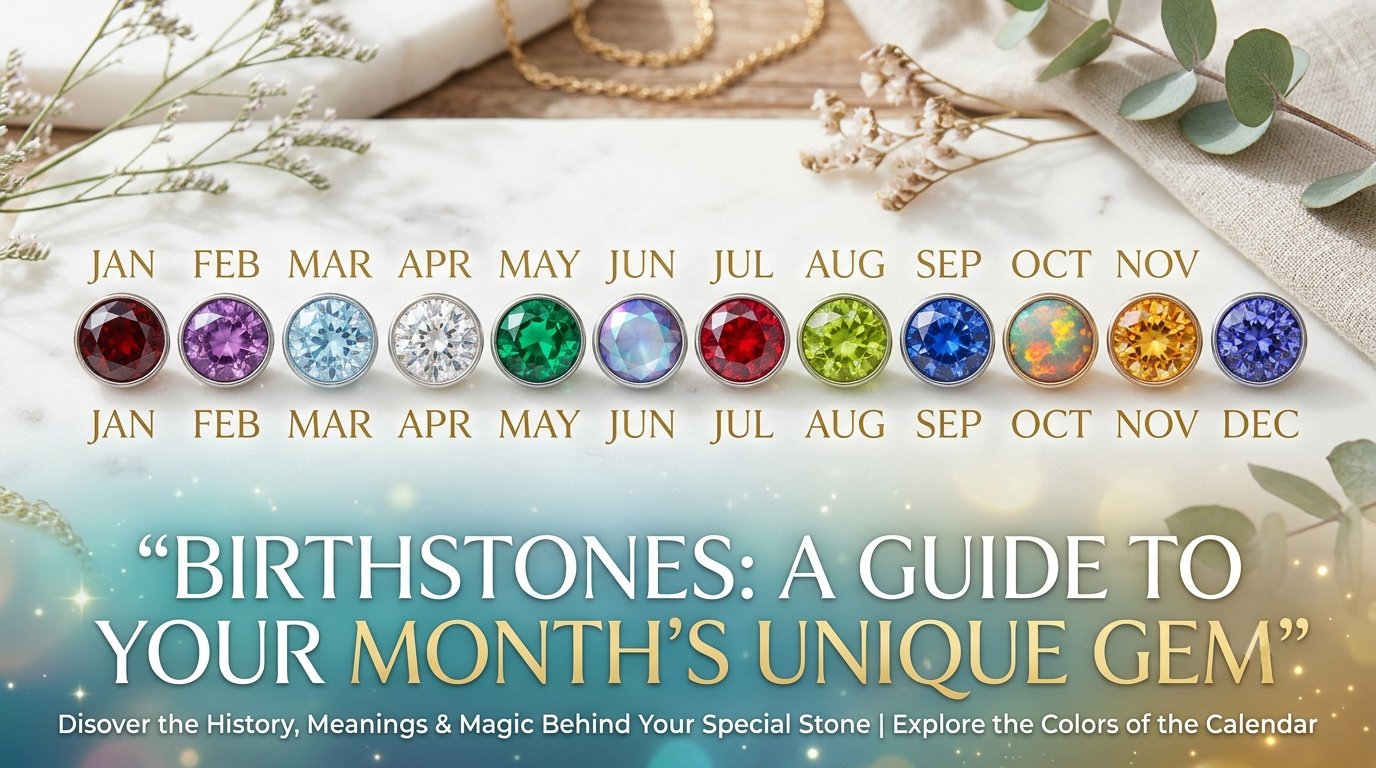
January – Garnet
Garnet is best known for its rich red colour, although it also occurs in other shades. It is traditionally associated with protection, friendship, commitment, and strength.
Popular jewellery choices: garnet rings, silver pendants, earrings, and personalised gifts.
February – Amethyst
Amethyst is a purple variety of quartz, ranging from pale lavender to deep violet. It is traditionally associated with peace, wisdom, clarity, and balance.
Popular jewellery choices: amethyst pendants, cocktail rings, drop earrings, and everyday silver jewellery.
March – Aquamarine
Aquamarine is known for its refreshing blue to blue-green colour. Its name is associated with the colour of seawater, and it is traditionally linked with tranquillity, courage, and harmony.
Popular jewellery choices: aquamarine rings, delicate necklaces, earrings, and elegant occasion jewellery.
April – Diamond
Diamond is valued for its exceptional hardness, brilliance, and sparkle. It is traditionally associated with love, strength, purity, and lasting commitment.
Popular jewellery choices: diamond rings, pendants, anniversary jewellery, and special-occasion designs.
May – Emerald
Emerald is a green variety of beryl, admired for its vivid colour and luxurious appearance. It is traditionally associated with renewal, prosperity, growth, and love.
Popular jewellery choices: emerald rings, gemstone pendants, statement earrings, and classic silver designs.
June – Pearl, Alexandrite, and Moonstone
June has several recognised birthstones, depending on the tradition. Pearl offers a soft, elegant appearance; alexandrite is famous for its colour-changing effect; and moonstone is admired for its glowing optical appearance.
Popular jewellery choices: pearl earrings, moonstone pendants, alexandrite rings, and personalised jewellery.
July – Ruby
Ruby is a red variety of corundum, prized for its rich colour and durability. It is traditionally associated with passion, confidence, courage, and vitality.
Popular jewellery choices: ruby rings, silver earrings, pendants, and statement pieces.
August – Peridot, Spinel, and Sardonyx
Peridot is recognised by its bright olive-green colour. Spinel occurs in a variety of colours, while sardonyx is known for its distinctive banded appearance.
Popular jewellery choices: peridot pendants, colourful gemstone rings, and contemporary silver earrings.
September – Sapphire
Sapphire is a variety of corundum that occurs in several colours, although blue is particularly well known. It is traditionally associated with wisdom, loyalty, sincerity, and faithfulness.
Popular jewellery choices: sapphire rings, pendants, gemstone studs, and elegant occasion jewellery.
October – Opal and Tourmaline
Opal is celebrated for its distinctive play of colour, while tourmaline occurs in many colours, including pink, green, blue, and multicoloured varieties.
Popular jewellery choices: opal pendants, tourmaline rings, colourful earrings, and artistic silver jewellery.
November – Topaz and Citrine
Topaz occurs in several colours, including blue, while citrine is a yellow to golden-orange variety of quartz. Both offer attractive options for colourful jewellery.
Popular jewellery choices: citrine rings, blue topaz pendants, statement earrings, and gifting jewellery.
December – Turquoise, Tanzanite, and Zircon
December has several recognised birthstones. Turquoise is admired for its blue-green appearance, tanzanite for its blue-violet colour, and zircon for its brilliance and variety of colours.
Popular jewellery choices: turquoise silver jewellery, tanzanite pendants, zircon earrings, and distinctive statement pieces.
Why Choose Custom Birthstone Jewellery?
Custom birthstone jewellery allows customers to create designs that are meaningful and personal. A gemstone can be chosen according to a birth month, favourite colour, personal style, or special occasion.
At Monica Silver Jewellery, birthstone-inspired designs can be explored for individual purchases, gifting collections, and jewellery businesses looking to develop personalised gemstone products.
3. Healing Stones: Meaning, Traditions, and Jewellery
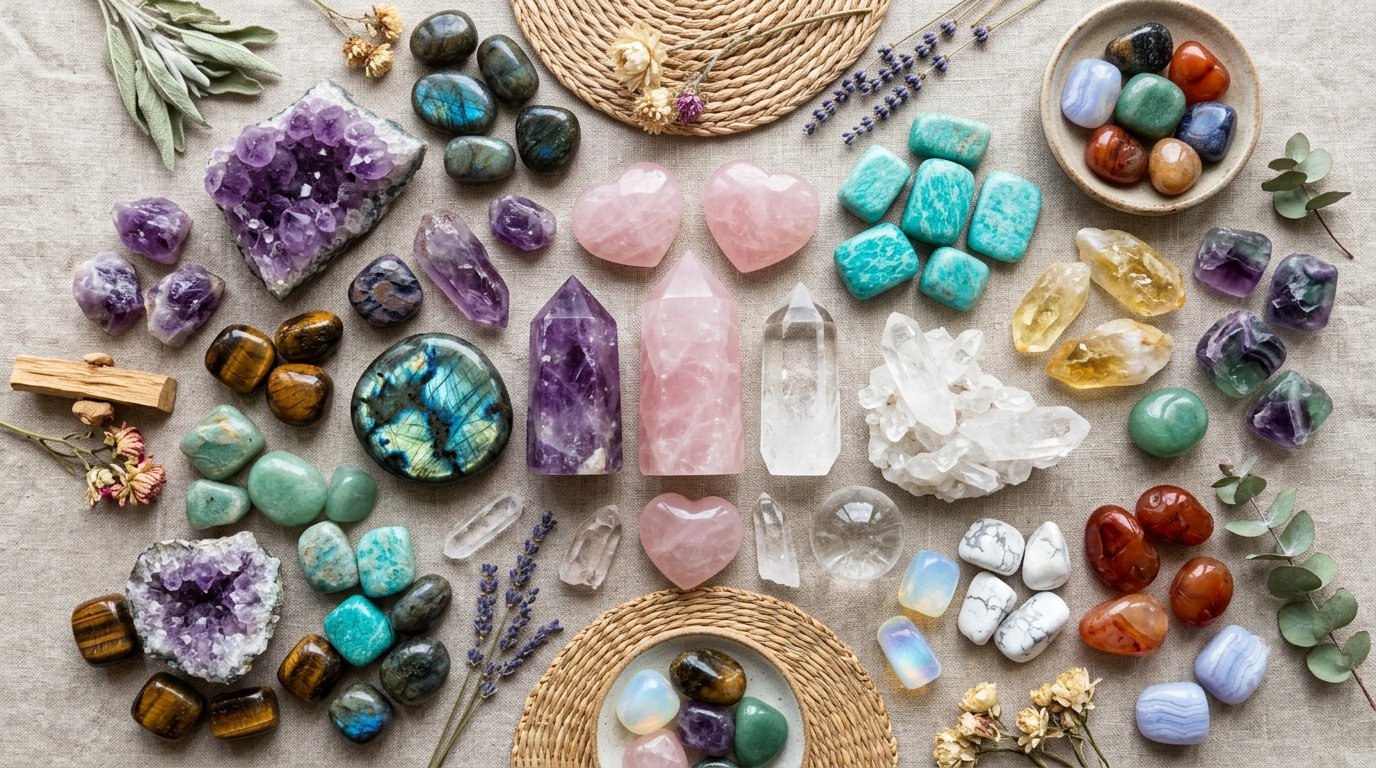
Healing stones are gemstones and crystals associated with traditional spiritual practices, meditation, and symbolic meanings. Different cultures and modern crystal traditions attribute different qualities to these stones.
Many people choose healing stones because they appreciate their colours, textures, symbolism, or connection to mindfulness and personal rituals.
It is important to understand that the claimed healing effects of crystals have not been established by reliable scientific evidence. Gemstones can be enjoyed as decorative objects or personal symbols, but they should not replace professional medical care.
Popular Healing Stones and Their Traditional Associations
Amethyst – Calm and Mindfulness
Amethyst is traditionally associated with peace, relaxation, and spiritual awareness. Its purple colour makes it a popular choice for pendants, rings, and meditation-inspired jewellery.
Rose Quartz – Love and Compassion
Rose quartz is usually pale pink to medium pink. In crystal traditions, it is associated with love, kindness, and emotional connection.
It is frequently used in heart-shaped pendants, delicate bracelets, and romantic jewellery designs.
Black Tourmaline – Protection
Black tourmaline is often associated with grounding and protection in crystal traditions. Its dark colour works well in modern, minimalist, and unisex jewellery.
Citrine – Positivity and Abundance
Citrine is traditionally connected with optimism, confidence, and abundance. Its golden hues bring warmth to silver jewellery and make it attractive for statement rings and pendants.
Moonstone – Intuition and New Beginnings
Moonstone is admired for its soft glow, often called adularescence. It is traditionally associated with intuition, femininity, and new beginnings.
Labradorite – Transformation and Creativity
Labradorite is known for flashes of blue, green, gold, or other colours that appear as light moves across the stone. It is often associated with creativity, transformation, and self-discovery.
Turquoise – Balance and Protection
Turquoise has been valued across many cultures for its distinctive blue-green appearance. It is traditionally associated with protection, good fortune, and balance.
Lapis Lazuli – Wisdom and Self-Expression
Lapis lazuli is a deep blue stone that may contain golden pyrite inclusions. It is traditionally associated with wisdom, truth, confidence, and communication.
How to Choose a Healing Stone for Jewellery
When selecting a gemstone, consider:
- Colour: Choose a colour that suits your wardrobe, personality, or jewellery collection.
- Meaning: Explore traditional associations if symbolic significance is important to you.
- Durability: Some stones are more vulnerable to scratches, impact, heat, or chemicals.
- Setting: The design should protect the gemstone and suit its shape and physical properties.
- Comfort: Consider the stone’s size, weight, and intended use.
For custom gemstone jewellery, the most suitable stone balances visual appeal, practical wearability, and the desired design.
4. Precious vs Semi-Precious Gemstones
Gemstones are often classified as precious or semi-precious in traditional jewellery terminology. These categories can help customers understand common gemstone groupings, but they do not provide a complete measure of a stone’s quality or value.
The price of a gemstone depends on factors such as rarity, colour, clarity, cut, carat weight, treatment, origin where established, and market demand.
What Are Precious Gemstones?
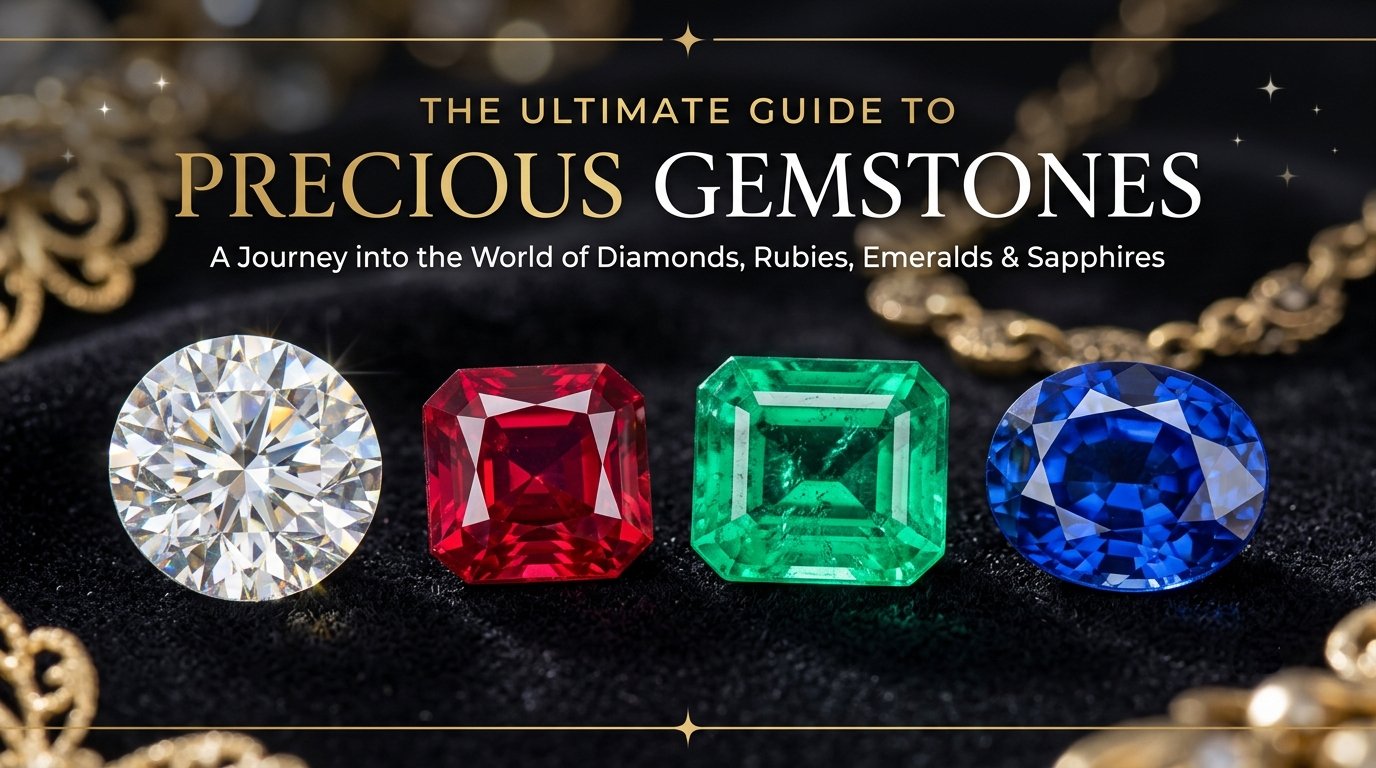
The traditional precious gemstone category includes four principal varieties.
Diamond: Known for its brilliance and exceptional hardness, diamond is widely used in engagement rings, fine jewellery, and luxury designs.
Ruby: A red variety of corundum, ruby is valued for its rich colour, durability, and rarity in fine qualities.
Sapphire: Another variety of corundum, sapphire occurs in blue and many other colours. It is popular for its durability and versatile appearance.
Emerald: A green variety of beryl, emerald is admired for its distinctive colour. Natural inclusions are common, and many emeralds receive treatments to improve their appearance.
These gemstones are frequently used in fine jewellery, premium custom designs, and special-occasion collections.
What Are Semi-Precious Gemstones?
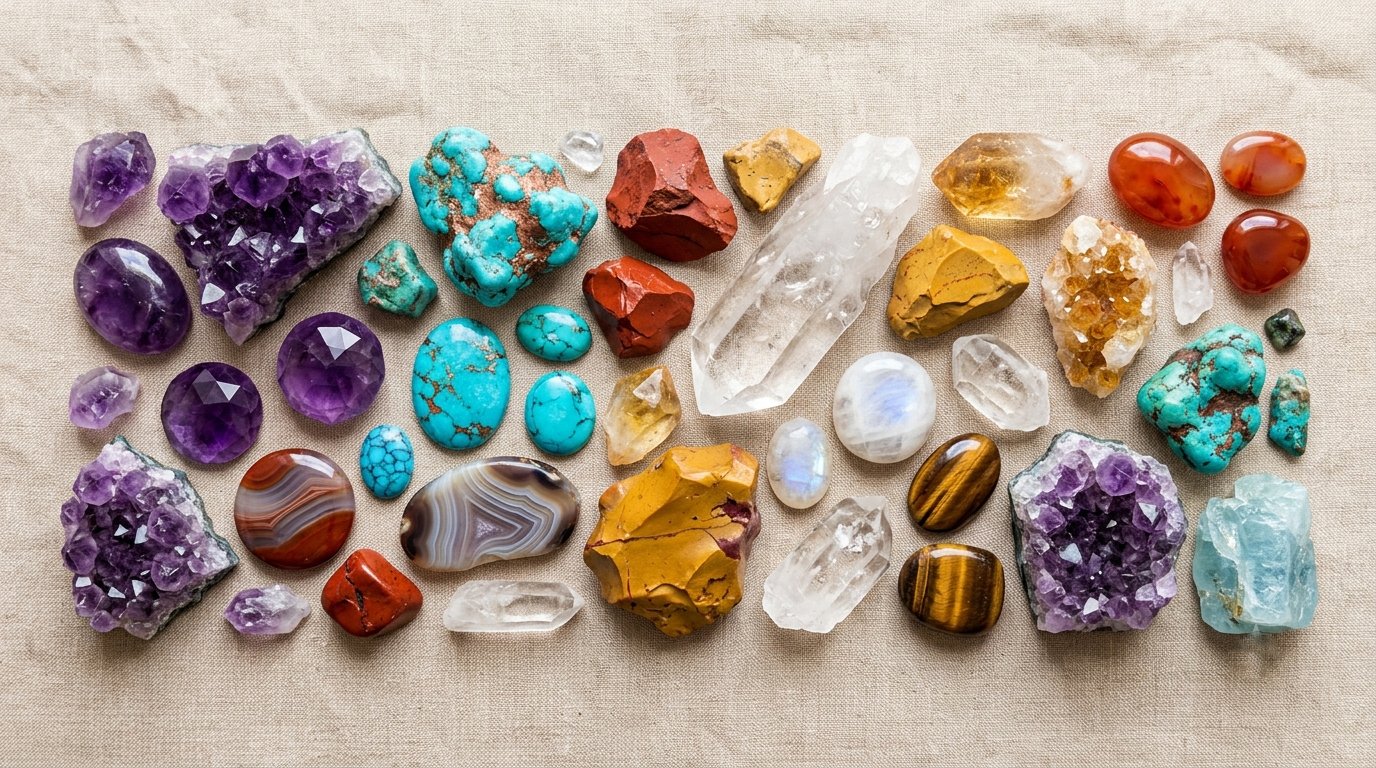
The term semi-precious traditionally describes gemstones other than diamond, ruby, sapphire, and emerald. It does not mean that these stones are necessarily inexpensive or low quality.
Some semi-precious gemstones are rare and highly valued, while many offer a wide range of accessible design possibilities.
Popular examples include:
- Amethyst: Purple quartz with an elegant, versatile appearance.
- Garnet: Available in several colours, with deep red being especially familiar.
- Citrine: Yellow to golden-orange quartz.
- Peridot: A distinctive green gemstone.
- Topaz: Available in several colours and widely used in jewellery.
- Aquamarine: A blue to blue-green variety of beryl.
- Moonstone: Known for its characteristic floating glow.
- Labradorite: Appreciated for its iridescent flashes.
- Turquoise: A popular opaque blue-green gemstone.
- Lapis lazuli: A deep blue ornamental stone.
- Rose quartz: A soft pink variety of quartz.
- Onyx: Commonly black and suitable for bold, contemporary designs.
- Agate: Known for its patterns, banding, and colour variations.
- Opal: Celebrated for its play-of-colour in varieties that display this optical effect.
Precious and Semi-Precious Gemstones Compared
| Feature | Precious gemstones | Semi-precious gemstones |
|---|---|---|
| Traditional examples | Diamond, ruby, sapphire, emerald | Amethyst, garnet, citrine, moonstone |
| Colour range | Varies by gemstone | Often very broad |
| Price | Can be high, depending on quality | Ranges from affordable to highly valuable |
| Jewellery applications | Fine jewellery, luxury designs, special occasions | Everyday jewellery, fashion collections, statement pieces, custom designs |
| Selection priorities | Quality, rarity, colour, treatment, durability | Colour, quality, durability, pattern, treatment, design suitability |
Which gemstone is best for jewellery manufacturing?
There is no single best gemstone for every design. A durable sapphire may suit a frequently worn ring, while moonstone or opal may be better suited to a carefully designed pendant or earrings that receive less impact.
The best choice depends on the design, budget, intended wearer, and properties of the gemstone.
5. Natural, Lab-Grown, and Treated Gemstones
Understanding how a gemstone was formed or processed is important when buying gemstone jewellery or developing a jewellery collection.
Natural Gemstones
Natural gemstones form through geological processes in the Earth, or through natural biological processes in the case of certain organic gem materials. They are extracted, sorted, cut, and polished for use in jewellery.
Natural stones can show variations in colour, inclusions, shape, and pattern.
Lab-Grown Gemstones
Lab-grown gemstones are created using controlled processes that reproduce the growth of the corresponding gemstone material. Many have essentially the same chemical composition and crystal structure as their natural counterparts.
Their origin should be clearly disclosed because lab-grown gemstones are not the same as natural mined gemstones, even when their physical properties are very similar.
Treated Gemstones
Some gemstones undergo treatments to improve or change their appearance. Common examples include heating, irradiation, dyeing, and fracture filling, depending on the gemstone.
Treatments can affect value, care requirements, and suitability for particular jewellery designs.
At Monica Silver Jewellery, clear communication about gemstone identity, origin where known, and relevant treatments is an important consideration for building customer confidence and supporting informed purchasing decisions.
6. How Gemstones Are Transformed Into Jewellery: The Manufacturing Process
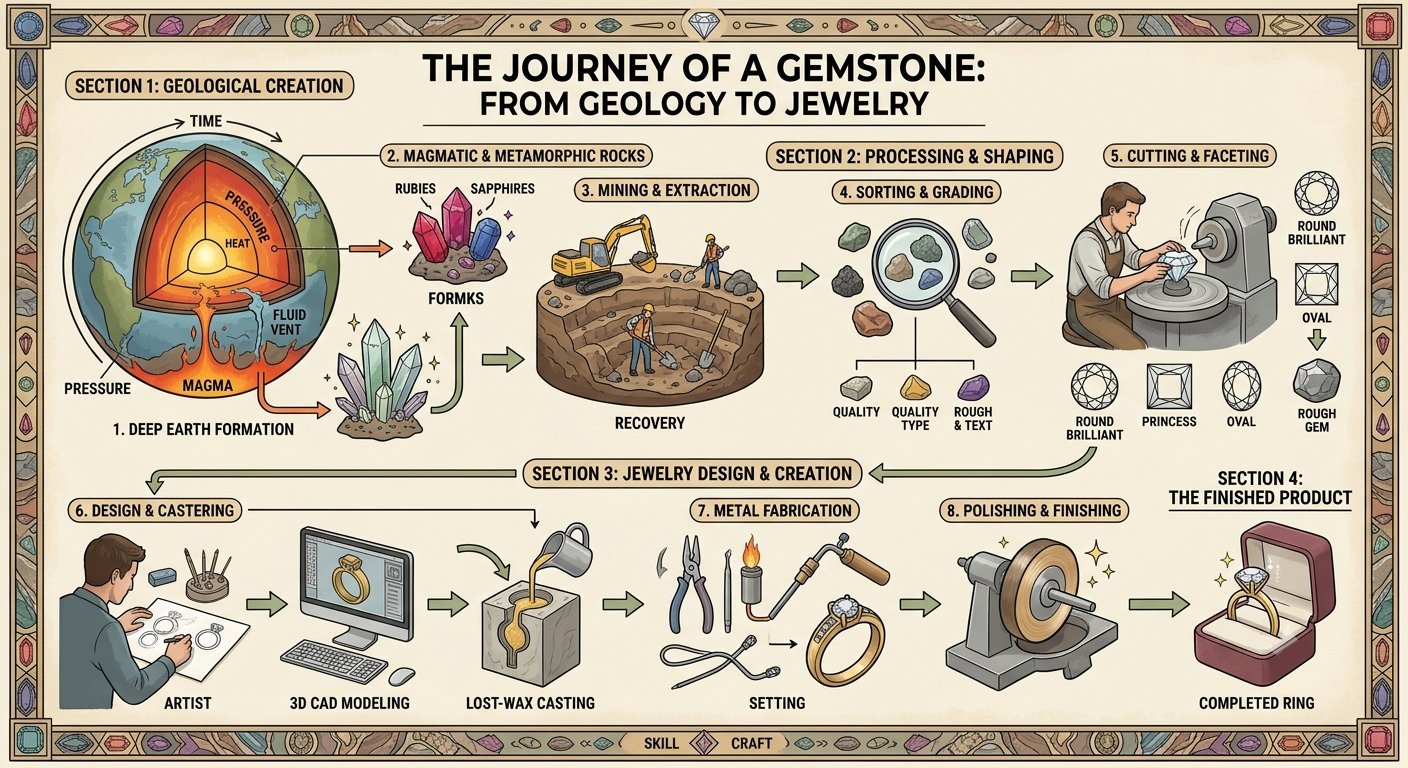
Gemstone jewellery manufacturing combines material knowledge, design, skilled craftsmanship, and quality control. The exact process depends on whether the piece uses a pre-cut gemstone, a custom-cut stone, a calibrated stone, or an irregular natural stone.
Here is a typical step-by-step overview of how a gemstone becomes a finished piece of silver jewellery.
Step 1: Gemstone Selection and Sourcing
The process begins with selecting gemstones that suit the design brief.
Factors considered include:
- Gemstone type and identity
- Colour and colour consistency
- Size and dimensions
- Shape and cutting style
- Clarity and visible inclusions
- Durability and suitability for the intended jewellery
- Natural, lab-grown, or treated status
- Required quantity and budget
For bulk and wholesale jewellery orders, consistency between stones may be particularly important. For one-of-a-kind designs, natural variations may instead be an essential part of the product’s appeal.
Step 2: Gemstone Inspection and Grading
After sourcing, gemstones are examined for visible characteristics, dimensions, condition, and suitability for the intended design.
Gemstone grading depends on the type of stone and the criteria being evaluated. The familiar four Cs—colour, clarity, cut, and carat weight—are particularly associated with diamond grading, although colour, clarity, cut, and weight can also be useful considerations for other gemstones.
For certain gemstones, treatments and origin may also influence commercial value.
Careful inspection helps reduce the risk of using stones with unsuitable dimensions, damage, or characteristics that do not match the design requirements.
Step 3: Gemstone Cutting and Shaping
Rough gemstone material is transformed into a finished shape through cutting and polishing. Depending on the material and intended design, this may involve faceting, cabochon cutting, or other shaping techniques.
Common gemstone cuts include:
- Round
- Oval
- Pear
- Cushion
- Emerald cut
- Princess cut
- Marquise
- Teardrop
- Cabochon
Faceted cuts are designed to interact with light and create brilliance, while cabochons have a smooth, polished surface and are often used for opaque or special-effect stones.
The selected shape affects the jewellery’s style, proportions, setting requirements, and overall appearance.
Step 4: Jewellery Design and CAD Modelling
Once the gemstone specifications are known, the jewellery design is developed around the stone.
The design stage may include hand-drawn sketches, technical drawings, or computer-aided design (CAD) models.
Important design considerations include:
- Gemstone dimensions and depth
- Ring size or overall jewellery measurements
- Metal weight and thickness
- Setting style and security
- Wearability and comfort
- Aesthetic proportions
- Manufacturing feasibility
- Target price and production quantity
CAD modelling is especially useful for custom jewellery and repeatable production because it allows dimensions and setting details to be reviewed before manufacturing begins.
Step 5: Silver Jewellery Manufacturing
After design approval, the silver component is produced using a suitable manufacturing method. Depending on the product, this may involve casting, fabrication, stamping, machining, or a combination of techniques.
For a typical cast silver jewellery piece, the process may include:
- Creating a model or wax pattern.
- Preparing a mould and casting investment.
- Casting the silver component.
- Removing the casting material.
- Cutting away sprues and cleaning the piece.
- Filing, shaping, and refining the metal.
- Preparing the setting for the gemstone.
Other manufacturing techniques may be more appropriate for thin, geometric, handcrafted, or highly detailed designs.
Step 6: Gemstone Setting
Gemstone setting is one of the most important stages of jewellery manufacturing. The setting holds the gemstone securely while displaying its colour and shape.
Common setting styles include:
Prong setting: Small metal claws hold the gemstone in place while leaving much of its surface visible.
Bezel setting: A rim of metal surrounds the gemstone’s edge, offering a protective design that works well for many shapes.
Pavé setting: Small gemstones are placed close together and held by tiny metal beads or prongs.
Channel setting: Gemstones are secured within a channel of metal, often in bands and linear designs.
Flush setting: A gemstone is set into a prepared opening so that its surface sits close to the surrounding metal.
The best setting depends on the stone’s shape, thickness, hardness, cleavage, and vulnerability to impact. A skilled setter must also account for the exact dimensions of the gemstone and the design’s intended use.
Step 7: Polishing and Finishing
After setting, the jewellery goes through finishing operations appropriate to the design.
These may include:
- Surface smoothing
- Fine polishing
- Bright finishing or matte finishing
- Oxidised finishes for selected silver designs
- Cleaning and removal of manufacturing residues
- Final detailing and inspection
A high-quality finish enhances the appearance of silver and helps the gemstone stand out.
Because certain gemstones are sensitive to heat, chemicals, or ultrasonic cleaning, the finishing method must be selected according to the materials used and whether the gemstone has already been set.
Step 8: Quality Control
Before a piece is considered complete, it should be inspected against the design specifications and quality requirements.
Quality checks may cover:
- Correct gemstone type and dimensions
- Gemstone security
- Setting alignment
- Metal finish and surface quality
- Ring size and product measurements
- Earring symmetry, where applicable
- Clasps, links, and other functional components
- Visible damage or manufacturing defects
- Order quantity and design consistency
For wholesale and custom orders, quality-control requirements can be agreed upon before production to support consistency across the batch.
Step 9: Final Cleaning, Packaging, and Dispatch
Once the jewellery passes inspection, it is cleaned using a suitable method, dried, and prepared for packaging.
Depending on the order, packaging and dispatch preparation may include individual product protection, product identification, quantity verification, and shipment documentation.
For jewellery businesses, reliable product identification and careful packaging are particularly useful when managing multiple gemstone varieties, sizes, and designs.
7. Why Choose Custom Gemstone Jewellery Manufacturing?
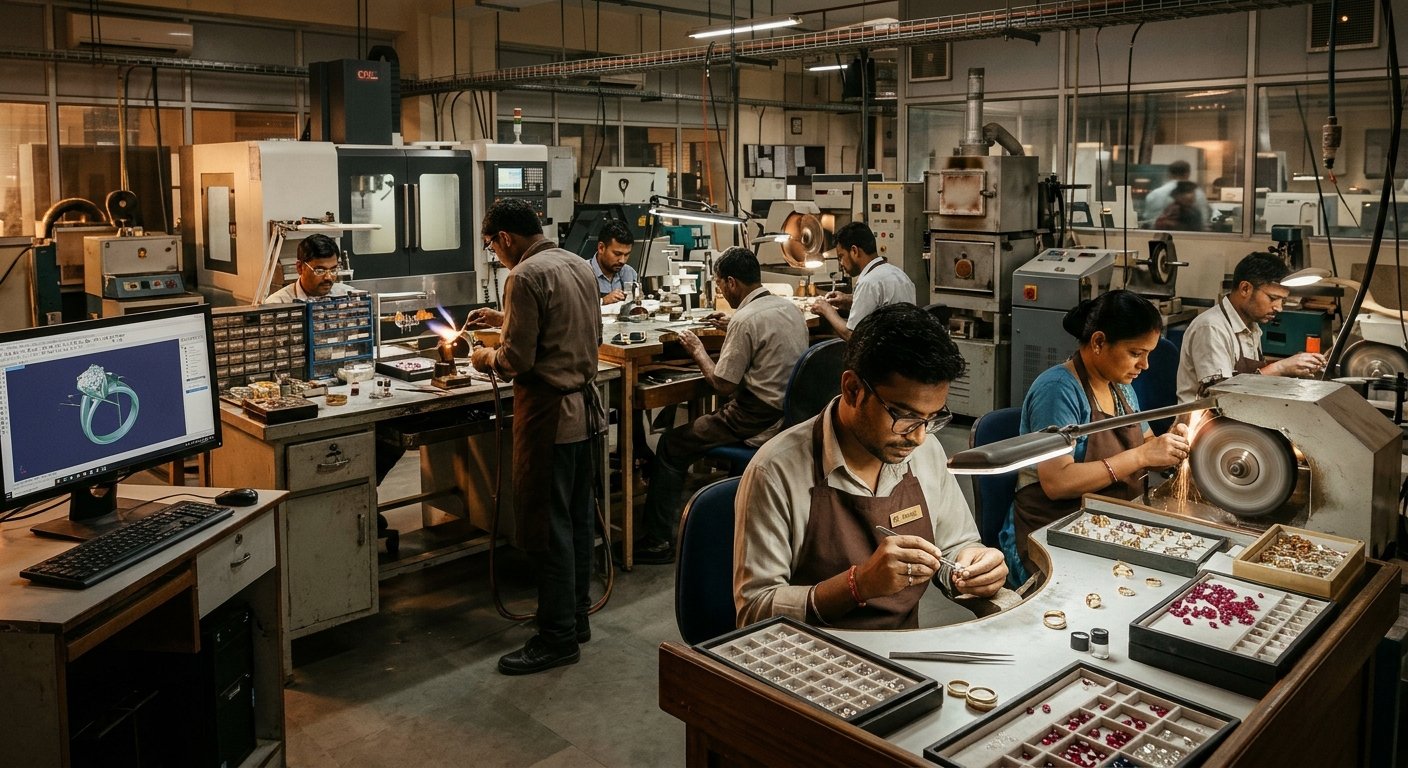
Custom gemstone manufacturing gives jewellery businesses and individual buyers more control over the final product than selecting only from ready-made designs.
It allows the gemstone, metal, dimensions, setting, finish, and overall style to be developed around a specific requirement.
Benefits of Custom Manufacturing
Personalised designs: Create jewellery based on a concept, occasion, brand identity, or customer preference.
Gemstone flexibility: Explore different gemstone varieties, colours, shapes, and sizes.
Design control: Adjust settings, proportions, metal details, and finishing options.
Collection development: Build coordinated ranges of rings, earrings, pendants, and bracelets.
Wholesale opportunities: Develop repeatable designs for retailers and jewellery brands, subject to production capabilities and order requirements.
Distinctive products: Use carefully selected gemstones and thoughtful design details to create a recognisable jewellery collection.
At Monica Silver Jewellery, the custom manufacturing approach is centred on connecting gemstone selection with jewellery design, craftsmanship, and the requirements of the intended customer or collection.
8. How to Choose the Right Gemstone for Your Jewellery Design
The right gemstone is not always the rarest or most expensive option. It is the stone that best matches the design, wearer, budget, and intended use.
Consider these factors before finalising a gemstone.
Colour and Appearance
Choose a colour that complements the silver, the jewellery style, and the intended wearer. Strong contrasts can create statement pieces, while softer shades can produce delicate everyday designs.
Hardness and Durability
Gemstones differ in hardness, toughness, cleavage, and sensitivity to environmental conditions.
For example, diamond and sapphire are highly scratch-resistant, while opal and moonstone require more careful handling. Hardness alone does not determine overall toughness or resistance to breakage.
For frequently worn rings, gemstone durability and setting protection deserve particular attention.
Size and Shape
Gemstone dimensions influence the appearance, weight, cost, and structure of the jewellery. The stone should be selected early enough to ensure that the setting and metal design can accommodate it correctly.
Budget
The price of a gemstone can vary significantly depending on quality, rarity, treatments, size, and market conditions. A well-chosen gemstone does not have to be the most expensive to create an attractive piece of jewellery.
Purpose and Occasion
Birthstone gifts, daily-wear jewellery, wedding jewellery, statement pieces, and wholesale collections can all have different requirements. Choosing the gemstone according to the product’s purpose helps guide the design and setting decisions.
9. How to Care for Gemstone Silver Jewellery
Proper care helps maintain the appearance of both the silver and the gemstone.
General Care Tips
- Store jewellery separately to reduce scratches and tangling.
- Remove jewellery before strenuous activities or situations where it could be knocked.
- Avoid direct contact with perfumes, household chemicals, and cosmetics where possible.
- Use a soft cloth for routine cleaning.
- Follow gemstone-specific cleaning instructions rather than applying the same method to every stone.
- Avoid ultrasonic cleaners or steam cleaning unless the gemstone and setting are confirmed to be suitable.
- Check settings periodically for loose stones or damaged prongs.
- Store delicate or porous gemstones in conditions appropriate to their material.
Silver can naturally tarnish over time. A suitable silver polishing cloth can help maintain its appearance, but polishing compounds should be kept away from gemstones that may be scratched, stained, or otherwise damaged.
For opal, turquoise, pearls, and other more delicate materials, specialised care guidance is particularly important.
10. Monica Silver Jewellery: Your Partner for Custom Gemstone Jewellery
Gemstones bring colour, character, and individuality to jewellery. From the traditional symbolism of birthstones to the rich variety of precious and semi-precious gemstones, there are countless ways to create jewellery that feels distinctive and meaningful.
The journey from gemstone selection to finished jewellery requires careful attention to stone quality, cutting, design, metalwork, setting, finishing, and quality control. Each stage contributes to the beauty, durability, and overall quality of the finished piece.
Monica Silver Jewellery focuses on custom gemstone jewellery manufacturing, bringing together gemstone-inspired design and silver jewellery craftsmanship to support distinctive jewellery concepts.
Whether you are exploring birthstone jewellery, colourful gemstone collections, traditional healing-stone designs, or custom products for your jewellery business, selecting the right gemstone is the first step towards creating a piece with its own identity.
Looking for Custom Gemstone Jewellery?
Connect with Monica Silver Jewellery to discuss your gemstone jewellery requirements, design ideas, preferred stone varieties, and collection goals.
From an individual design concept to a planned jewellery collection, a clear brief helps establish the appropriate gemstone specifications, manufacturing method, finishing details, and production requirements.
Monica Silver Jewellery — Bringing Gemstone Beauty and Custom Jewellery Design Together.
Frequently Asked Questions About Gemstones
1. What are the most popular gemstones for jewellery?
Popular gemstones include amethyst, garnet, citrine, turquoise, moonstone, topaz, peridot, sapphire, ruby, emerald, and diamond. The best choice depends on the design, budget, colour preference, and intended use.
2. What is the difference between precious and semi-precious gemstones?
Traditionally, diamond, ruby, sapphire, and emerald are classified as precious gemstones. Other gemstones are commonly called semi-precious, although this terminology does not necessarily reflect their market value or quality.
3. What is a birthstone?
A birthstone is a gemstone traditionally associated with a particular month. Birthstones are commonly used in personalised jewellery, birthday gifts, and meaningful keepsakes.
4. Do healing stones have scientifically proven benefits?
Many stones have traditional spiritual or symbolic associations, but there is no reliable scientific evidence that crystals provide the claimed medical healing effects. They can still be appreciated for their beauty, symbolism, and personal significance.
5. Can gemstones be customised for silver jewellery?
Yes. Suitable gemstones can be incorporated into custom silver rings, earrings, pendants, bracelets, and other designs. The final design depends on the stone’s dimensions, physical properties, setting requirements, and manufacturing specifications.
6. What is the process of gemstone jewellery manufacturing?
A typical process includes gemstone selection, inspection, cutting where required, design development, silver component manufacturing, gemstone setting, polishing, quality control, and packaging.
7. Which gemstones are suitable for everyday jewellery?
Durable gemstones such as sapphire and diamond are often suitable for everyday wear, especially in well-designed settings. Other stones can also be worn regularly when the jewellery design, protection, and care requirements are appropriate.
8. Can custom gemstone jewellery be manufactured for wholesale orders?
Custom gemstone jewellery can be developed for wholesale collections, depending on the manufacturer’s capabilities, gemstone availability, design complexity, and order quantities. Specifications and quality requirements should be agreed upon before production.
9. What factors affect gemstone prices?
Gemstone prices depend on the material, colour, clarity, cut, size, rarity, treatments, origin where established, and current market demand. Different gemstones require different evaluation criteria.
10. How do I choose a gemstone manufacturer?
Look for clear communication, suitable manufacturing capabilities, transparent gemstone descriptions, agreed product specifications, consistent quality-control procedures, and the ability to develop designs that meet your requirements.